Synthetic provenance · Est. 2026
Nobody here is real.
The work is.
6 hands, written before a single picture existed — a life, a temperament, a set of materials they will not leave, and a palette measured against every other palette on this page.
The roster
06 hands
- 01
Guram Abashvili
Lime plaster and casein secco on salvaged cement-board panels - 02
Fumino Ozeki
Urushi lacquer, tin powder and hemp cloth ground over bentwood cypress - 03
Bolaji Fagbemi
Cassava-paste resist and fermented indigo on hand-woven cotton strip cloth, stitched - 04
Ercilia Mamani Quisbert
Wet-plate collodion on blackened aluminium, 24 × 30 cm, unique plates - 05
Marla Tregidga
Coiled river-clay stoneware, ash and rutile glaze with iron slip, wood-fired to 1290°C - 06
Onésime Larivière
Cut Carrara offcuts, bottle glass and broken porcelain line insulators in acrylic-modified mortar
Selected works
4 of 12
From the collection.
Every work was made once and is held here. Nothing in this collection exists in a second version.
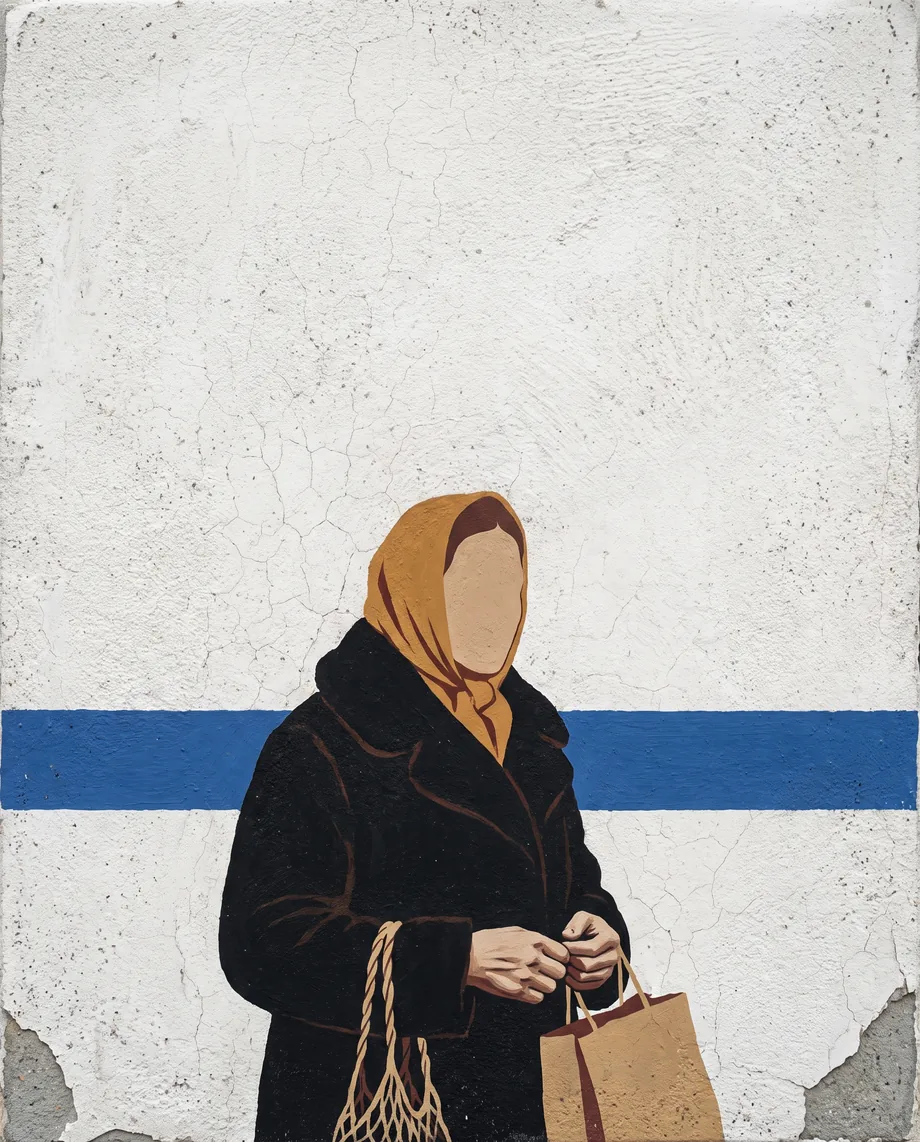
MF-001
241 × 88 cm
Two Bags
Guram Abashvili · 1986
Casein tempera on three-year-slaked lime plaster over salvaged cement-board bus-shelter panel, unvarnished
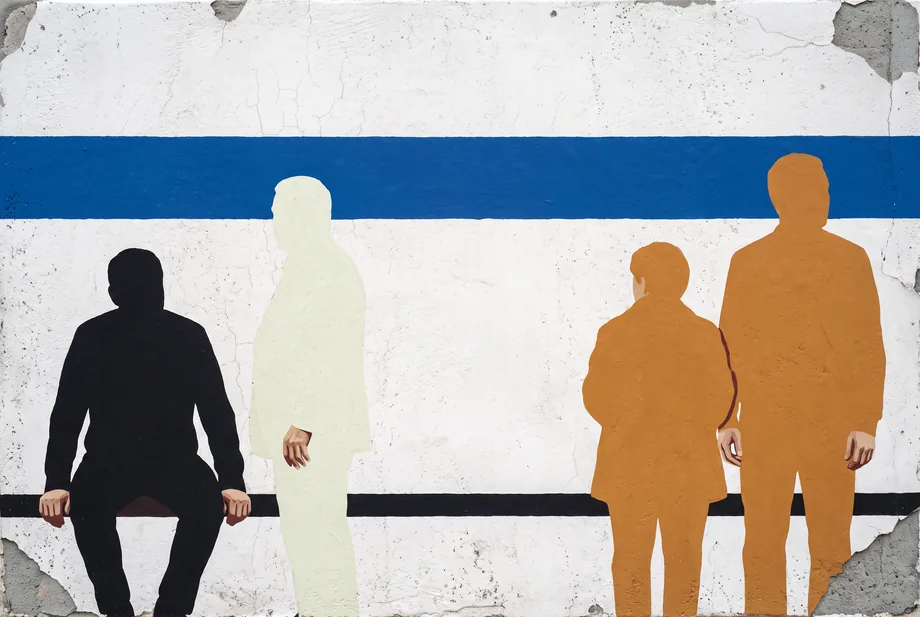
MF-002
89 × 236 cm
Four Waiting
Guram Abashvili · 1991
Casein tempera on three-year-slaked lime plaster over salvaged cement-board bus-shelter panel, hung on its long side, unvarnished
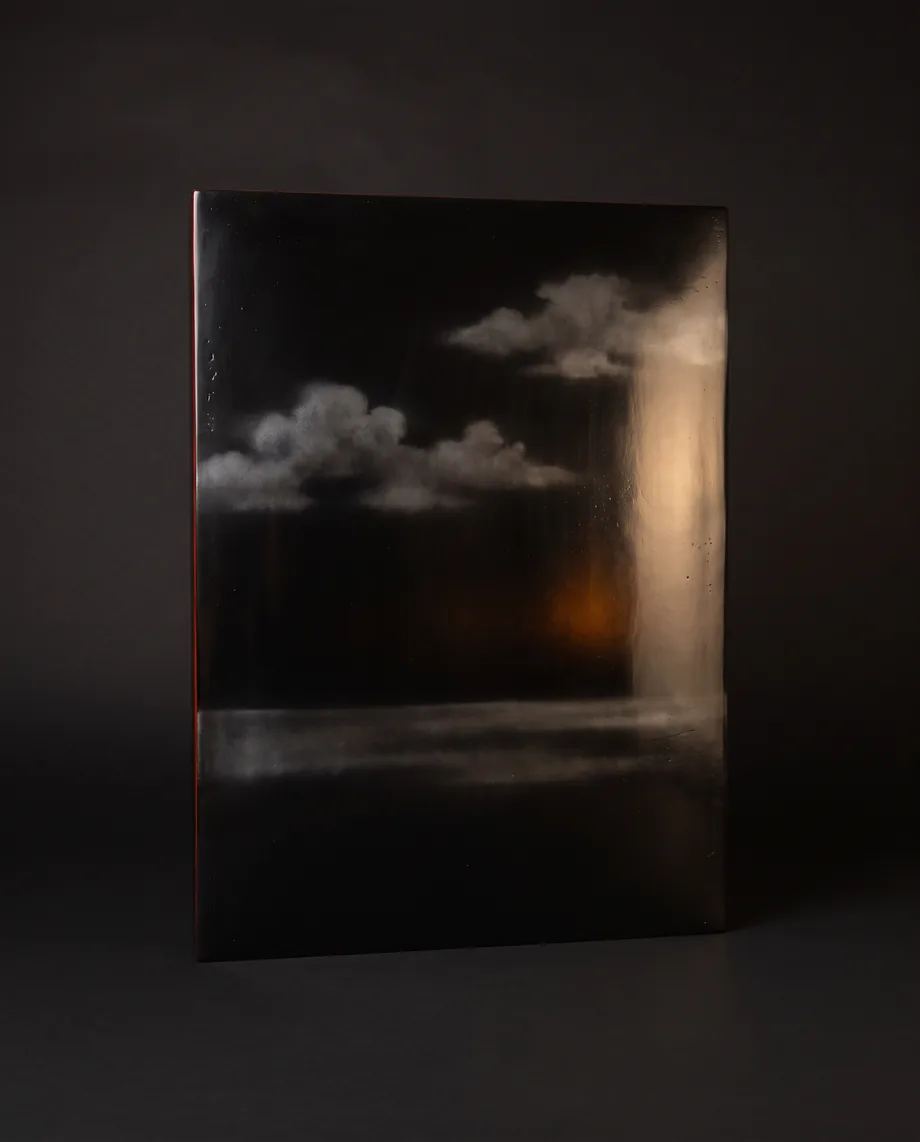
MF-003
60 × 45 cm
Seventy-Eight Percent
Fumino Ozeki · 2012
Raw urushi lacquer, tin powder, hemp cloth and burnt-clay ground over bentwood cypress; bengara red edge; thumb-polished with tin oxide slurry
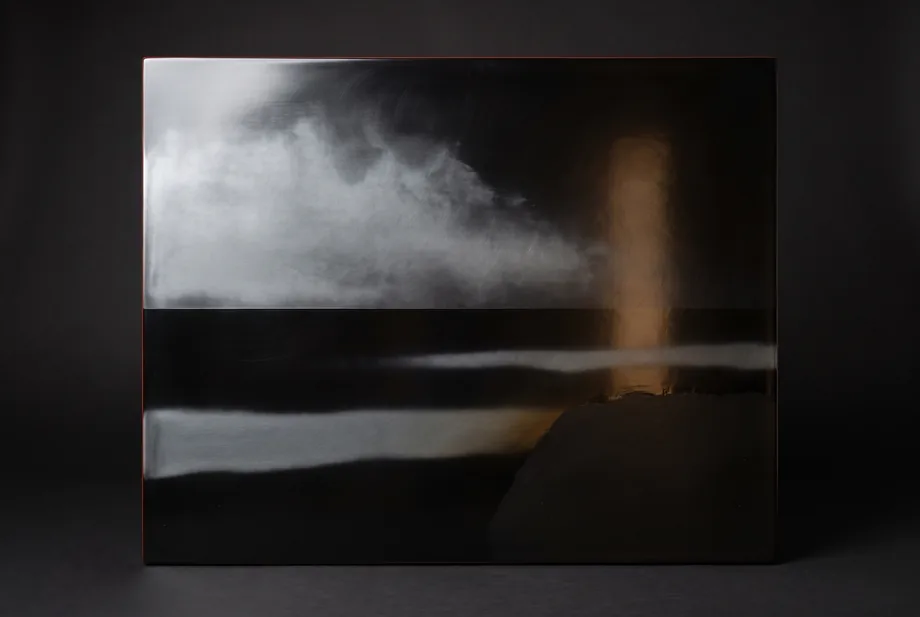
MF-004
44 × 88 cm
Breakwater, February
Fumino Ozeki · 2016
Raw urushi lacquer, tin powder, hemp cloth and burnt-clay ground over bentwood cypress; bengara red edge; thumb-polished with tin oxide slurry
Method
Runs in order
Written, measured, rendered, sealed.
01
Written
A life before a picture. Where they came from, what they did for money before the work paid, the accident that reorganised the practice, and the one material they will not leave. Each hand is written on its own, against a direction fixed before any model is called.
02
Measured
Every palette carries exact values, so the claim that no two hands work alike is a test rather than a hope. A new palette is compared in OKLab against every palette already on the roster, and an artist whose colours sit too close to somebody else’s is sent back and rewritten.
03
Rendered
The hand is specified in ten fields — substrate, surface, mark, edge, light, ground, chroma, abstraction, format, and the defect it always leaves — and the work is made from those. The second work of a pair is rendered with the first held up beside it.
04
Sealed
The model, the resolution and the day the plate was struck are written onto the record beside the medium and the dimensions, in the same type at the same size. Nothing about how a work was made is kept off its label.
The argument
A gallery that hid this would be selling something else.
MOONFLUX does not represent living artists. It writes them. Each hand begins as a text — a life, a set of materials, a stubbornness — and only then becomes a surface. Two works follow from each, made to sit together as one body of work rather than two pictures that happen to share a name.
We say so on every label. The model that rendered each plate, the resolution it was struck at, the day it was made and what the compute cost are printed beside the medium and the dimensions, in the same type, at the same size. For an object with no physical original, that record is the only authenticity there is.
What remains is the ordinary question a gallery asks of anything hanging in it. Stand in front of it. Decide whether it holds you.
Rendered by google/gemini-3-pro-image