Hand 04
Altiplano Plate School
Ercilia Mamani Quisbert
The high air dries collodion in ninety seconds, so her sitters barely breathe.
On record
- Life
- b. 1968, Llallagua — lives in El Alto
- Origin
- Llallagua, Potosí
- Medium
- Wet-plate collodion on blackened aluminium, 24 × 30 cm, unique plates
- School
- Altiplano Plate School
- Works
- 02 in the collection
Influences
cooperative identity photography · silver nitrate held at twelve degrees · the hail wind off Huayna Potosí · painted market backdrops in La Ceja · the ninety-second collodion window · her mother's candle table
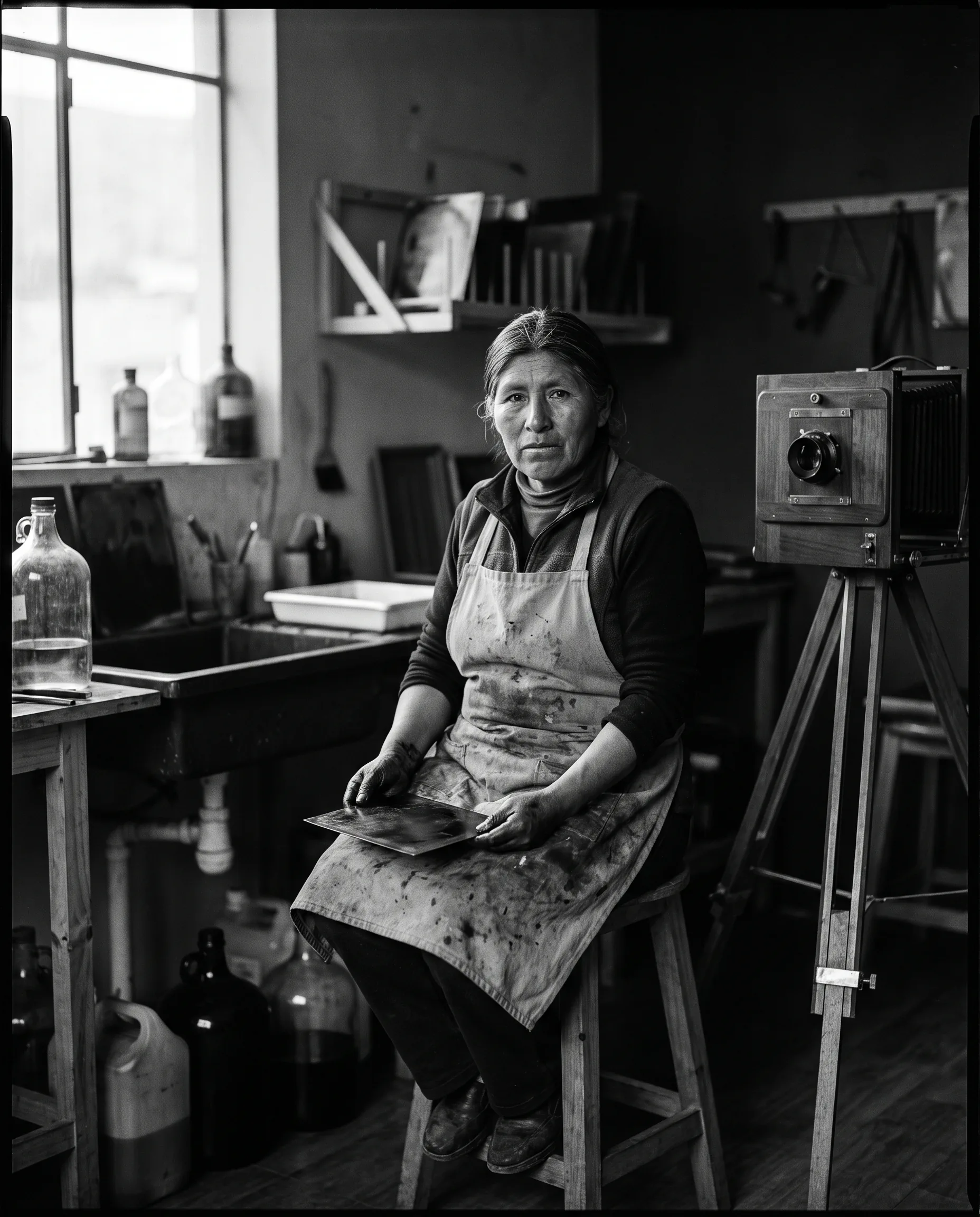
Mamani Quisbert grew up in Llallagua, where her mother sold pig-fat candles to the drilling crews. From 1991 she ran a portrait table at the pithead of a mining cooperative above the town, making identity photographs at forty bolivianos each: four thousand faces in eleven years, every one posed in the time it takes a man to lift off his helmet. She can settle a stranger's shoulders in twenty seconds and does not talk while she works. When she changed to wet plate in 2003 she kept the table, the stool and the two-metre distance.
She pours collodion in a plywood darkbox towed behind a bicycle. At four thousand metres the ether flashes off fast, so the mix is cut with extra alcohol and the plate must reach the silver bath inside a minute and the camera inside two, the bath riding wrapped in a wet wool blanket to hold twelve degrees. One whole winter came up veiled in grey: tailings dust in the silver, which no eye can see in a tin tray. She filters through cotton wool now and re-suns the bath on a bus roof in La Ceja.
There are three hundred and eleven plates, each on blackened aluminium, each unique, and she makes no prints from them at all. She works at the pithead in daylight and refuses to go underground, since the men have enough dark without her adding a camera to it. She will not photograph anyone whose name she cannot spell, and she writes that name on the back in grease pencil with the date and the direction of the wind.
“The plate gives me ninety seconds, so I have to know the face before I pour. In the cooperative I made documents; now I make the same picture and people call it art, which is fine, the price is different. Nobody in my plates is smiling, because nobody at that altitude has the air for it.”
The hand, as specified
- Substrate
- A wet-plate collodion image on blackened aluminium, tonal range compressed between collodion cream and bitumen black, silver bloom sitting on the highlights like frost. Pour swirls, comet streaks and bare metal run along the plate's borders; a thumbprint sits in one corner and holder scratches cross the edges. The sitter is frontal, chest up, filling two-thirds of the plate, eyes very sharp, hands cropped away, sky behind rendering as blank pewter. Hard high-altitude daylight from above at roughly 6500 kelvin puts violet shadow under the brow and hollows the cheeks. Shallow depth throws the ears soft. Vertical 24 by 30 centimetre plate, rounded corners, no retouching, no crop.
Selected exhibitions
- 2009Ninety Seconds of AirSala Minera Siglo Nuevo, Llallagua
- 2016Four Thousand Faces, Then Three HundredGalería La Ceja, El Alto
- 2022No PrintsMOONFLUX
In the collection
02 works
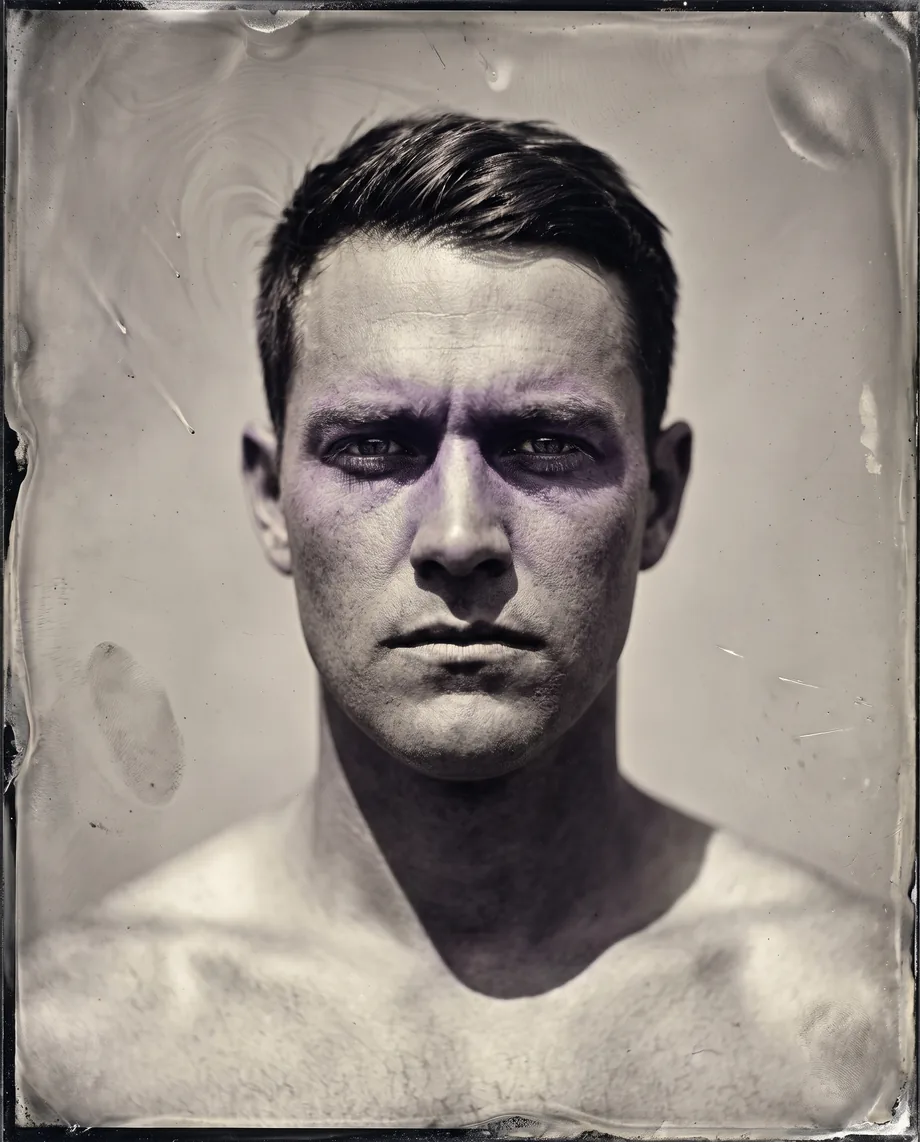
MF-007
30 × 24 cm
Eugenio Apaza, 14 June
Ercilia Mamani Quisbert · 2011
Wet-plate collodion on blackened aluminium, silver nitrate bath at twelve degrees, sandarac varnish; grease pencil on reverse; unique plate
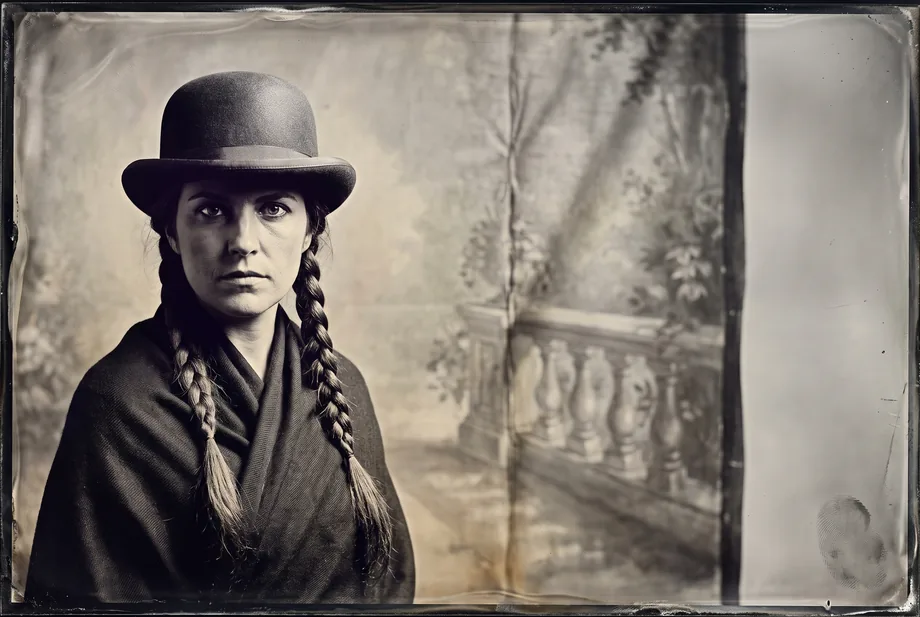
MF-008
24 × 30 cm
Basilia Nina, North Wind
Ercilia Mamani Quisbert · 2012
Wet-plate collodion on blackened aluminium, silver nitrate bath at twelve degrees, sandarac varnish; grease pencil on reverse; unique plate